Details
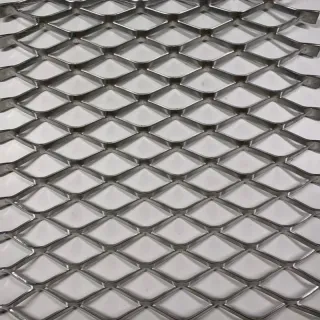
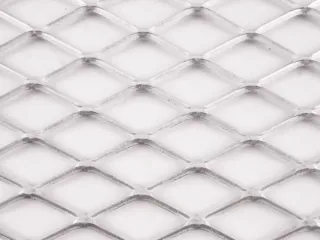
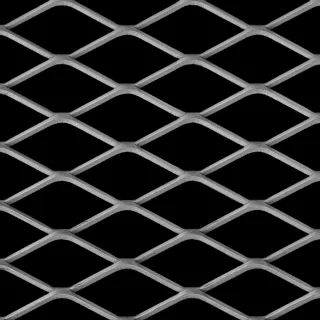
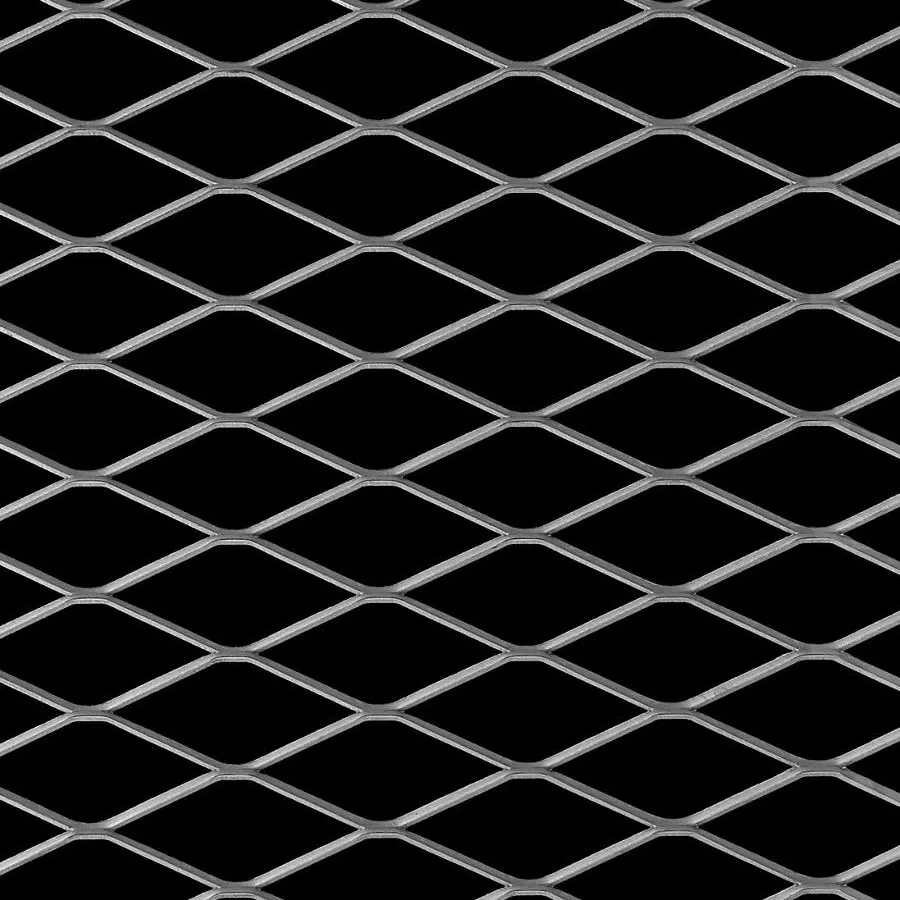
Materials:Galvanized Steel
Specification:Our capability covers LWD ranging from 0.75 mm up to 400 mm, and SWD ranging from 2 mm to 150 mm. Sheet thickness ranges from 0.3 mm to 15 mm, with a maximum width of 4000 mm.
Color:Customized Color
Packing:Customized Package
Category
Anping Yilida Metal Wire Mesh Co., Ltd. is one of the leading manufacturers and suppliers of galvanized steel standard expanded metal in China. Welcome to buy bulk durable galvanized steel standard expanded metal for sale here from our factory. If you have any enquiry about customized service, please feel free to email us.
Product Introduction
The production of galvanized steel expanded metal typically goes through two core stages: the mesh forming process and the galvanizing process. In the initial mesh forming stage, we select high-quality steel plates as raw materials, which are first cut into appropriate sizes according to specific specifications. Subsequently, using professional equipment such as mesh punching machines and leveling machines, the steel plates are processed into a mesh structure with uniform apertures, which can be customized according to different application requirements. After forming the mesh, the mesh sheets need to undergo strict surface treatment, including rust removal, degreasing, and cleaning, to remove impurities such as surface oxide layers and oil stains, ensuring good adhesion between the steel expanded metal and the galvanized layer.
The galvanizing process is a key step to enhance the performance of steel expanded metal, mainly divided into two methods: hot-dip galvanizing and electro-galvanizing. Hot-dip galvanizing involves immersing the cleaned steel expanded metal in molten zinc solution at a high temperature of 440-460°C, so that a uniform and dense zinc-iron alloy layer and pure zinc layer are formed on the surface of the steel expanded metal; this method ensures that the product has excellent corrosion resistance and a long service life, and can be used stably even in harsh outdoor or humid environments. Electro-galvanizing, on the other hand, uses the principle of electrolysis to deposit a relatively thin zinc layer on the surface of the steel expanded metal, which has the advantages of uniform coating, beautiful appearance, and low cost, and is suitable for scenarios with low corrosion resistance requirements. After galvanizing is completed, quality inspection of the steel expanded metal is carried out to check the thickness, uniformity, and adhesion of the galvanized layer, ensuring that the product meets relevant industry standards.
With reliable performance, galvanized steel expanded metal has a wide range of applications in multiple fields. In the construction industry, it is often used as wall reinforcement mesh, floor heating mesh, external wall insulation mesh, and fence mesh. Wall reinforcement mesh can effectively prevent wall cracking and improve the strength of building structures; floor heating mesh helps fix floor heating pipes and improve thermal conductivity. In the industrial field, it is applied to equipment protection nets, filter nets, and conveyor belts, relying on its high strength and wear resistance to adapt to the harsh working environment of factories. In addition, it is also used in transportation, environmental protection, and daily necessities fields, such as expressway guardrails, sewage treatment filters, and window screens. Galvanized steel expanded metal, with its mature production technology, stable product performance, and diverse application scenarios, has become an indispensable core product in modern production and life, and its market demand continues to grow with the development of various industries .
Hole Patterns
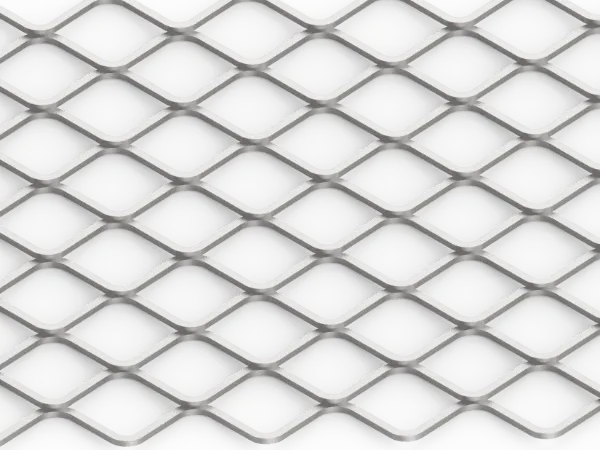
Diamond
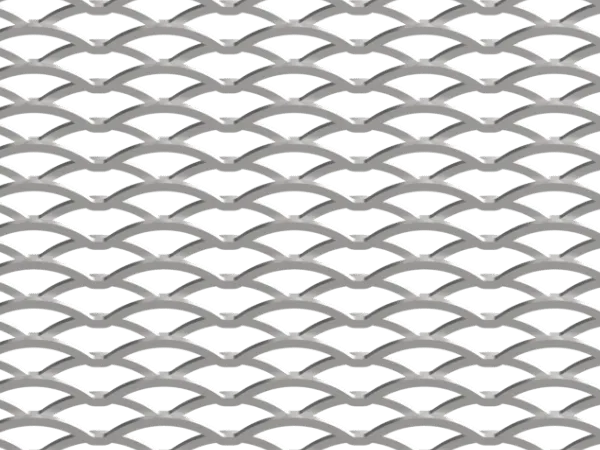
Fan-shaped
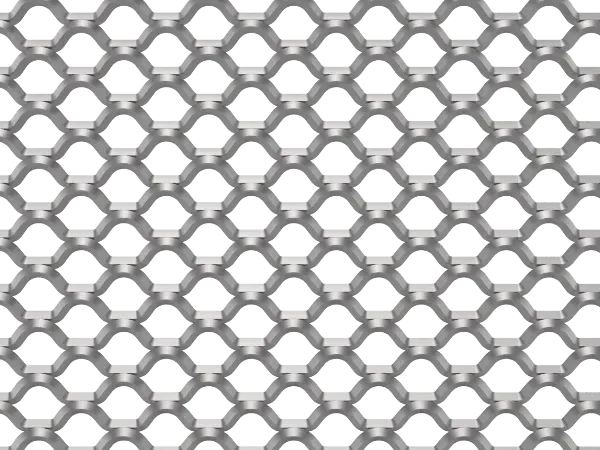
Round
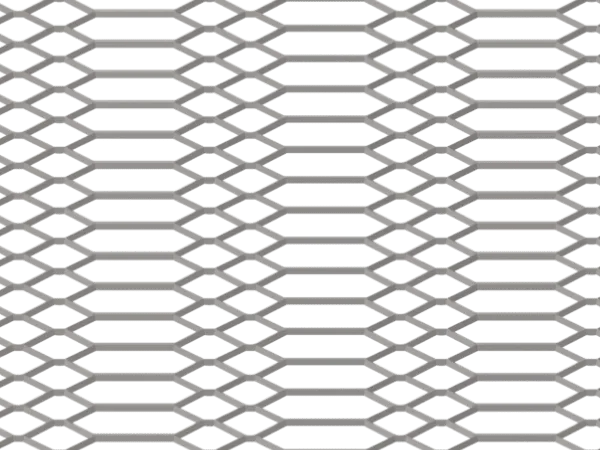
Gothic
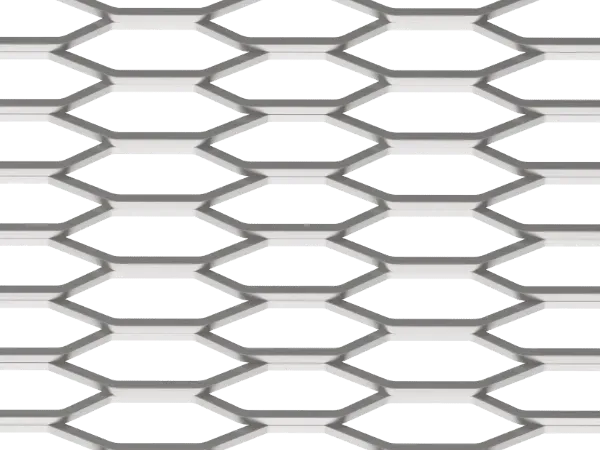
Hexagonal
Product Specification
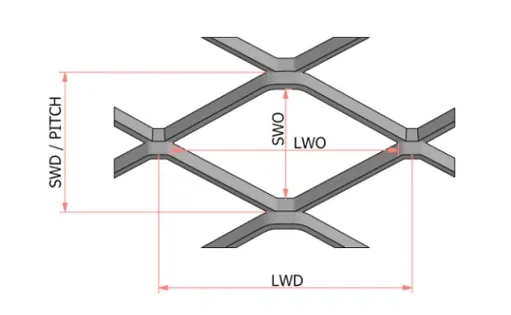
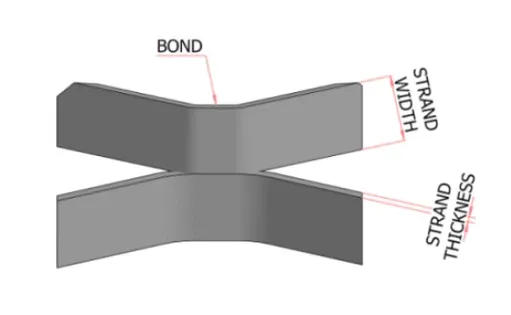
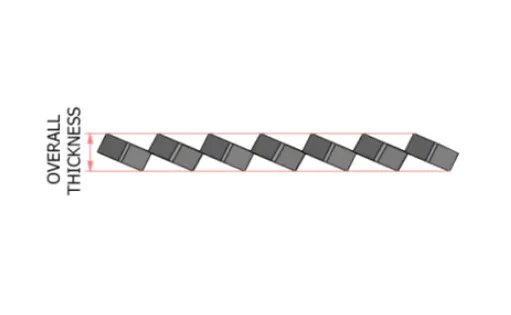
Specifications of Galvanized Steel Standard Expanded Metal
| Style | Minimum Thickness (inches)A | Nominal Weight in lbs./100 Sq. Ft.B | Design Size (inches)C | Opening Size (inches)C | Strand Size (inches) | Overall Thickness (inches) | Open Area | |||
| SWD | LWD | SWO | LWO | Width | Thickness | |||||
| ¼"-#20 | 0.032 | 85 | 0.250 | 1.00 | 0.157 | 0.718 | 0.072 | 0.036 | 0.146 | 42% |
| ¼"-#18 | 0.042 | 113 | 0.250 | 1.00 | 0.146 | 0.718 | 0.072 | 0.048 | 0.151 | 42% |
| ½"-#20 | 0.032 | 42 | 0.500 | 1.20 | 0.407 | 0.938 | 0.072 | 0.036 | 0.146 | 71% |
| ½"-#18 | 0.042 | 69 | 0.500 | 1.20 | 0.382 | 0.938 | 0.088 | 0.048 | 0.180 | 65% |
| ½"-#16 | 0.053 | 85 | 0.500 | 1.20 | 0.372 | 0.938 | 0.087 | 0.060 | 0.183 | 65% |
| ½"-#13 | 0.083 | 141 | 0.500 | 1.20 | 0.337 | 0.938 | 0.096 | 0.090 | 0.212 | 62% |
| ¾"-#16 | 0.053 | 54 | 0.923 | 2.00 | 0.783 | 1.750 | 0.101 | 0.060 | 0.208 | 78% |
| ¾"-#13 | 0.083 | 77 | 0.923 | 2.00 | 0.760 | 1.688 | 0.096 | 0.090 | 0.212 | 79% |
| ¾"-#10 | 0.083 | 117 | 0.923 | 2.00 | 0.718 | 1.625 | 0.144 | 0.092 | 0.300 | 69% |
| ¾"-#9 | 0.127 | 178 | 0.923 | 2.00 | 0.675 | 1.562 | 0.150 | 0.134 | 0.329 | 67% |
| 1"-#16 | 0.053 | 43 | 1.00 | 2.40 | 0.872 | 2.062 | 0.087 | 0.060 | 0.183 | 83% |
| 1½"-#18 | 0.042 | 20 | 1.33 | 3.00 | 1.229 | 2.625 | 0.068 | 0.048 | 0.144 | 90% |
| 1½"-#16 | 0.053 | 40 | 1.33 | 3.00 | 1.184 | 2.625 | 0.108 | 0.060 | 0.221 | 84% |
| 1½"-#13 | 0.083 | 58 | 1.33 | 3.00 | 1.160 | 2.500 | 0.105 | 0.090 | 0.228 | 84% |
| 1½"-#10 | 0.083 | 76 | 1.33 | 3.00 | 1.132 | 2.500 | 0.138 | 0.090 | 0.288 | 79% |
| 1½"-#9 | 0.127 | 119 | 1.33 | 3.00 | 1.087 | 2.375 | 0.144 | 0.134 | 0.318 | 78% |
| 1½"-#6 | 0.184 | 247 | 1.33 | 3.00 | 0.979 | 2.313 | 0.203 | 0.198 | 0.452 | 69% |
| 2"-#10 | 0.083 | 65 | 1.85 | 4.00 | 1.630 | 3.438 | 0.164 | 0.090 | 0.335 | 82% |
| 2"-#9 | 0.127 | 88 | 1.85 | 4.00 | 1.603 | 3.375 | 0.149 | 0.134 | 0.327 | 84% |
A The minimum thickness is absolute, not subject to minus variation. B A variation in weight per square ft. of ±10 % is permissible, based on the weight of any sheet or bundle. C A tolerance of ±10 % is permitted in dimensions, center to center. | ||||||||||
Production Workflow
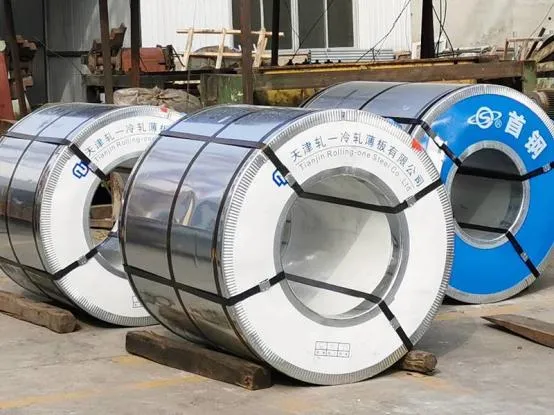
Raw material
Our raw material steel plates come from Baosteel, Shougang Group and other well-known suppliers. Besides, out quality inspector will test chemical composite, sizes and other relevant items when receiving the raw materials to ensure the raw materials received meet or even exceed corresponding quality standards and requirements.
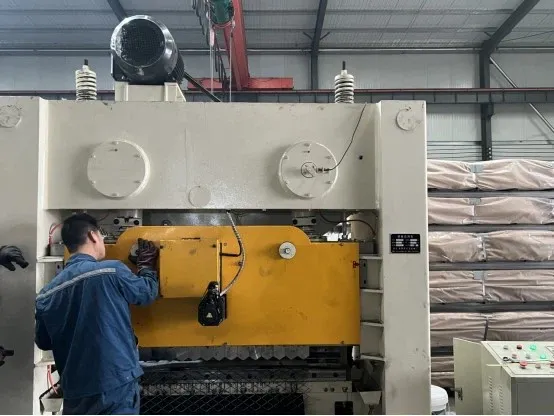
Stamping
We are equipped with 4000mm ultra-wide expanded metal production machines, flattening machines and leveling machines. We have independently developed and accumulated more than 1,000 types of precision expanded metal moulds, which can meet customers' demands for wider-sized expanded metal.According to your specific application scenarios, we can select or develop expanded metal with new hole patterns to meet your requirements in terms of load capacity, appearance, ventilation, sun shading and other aspects.
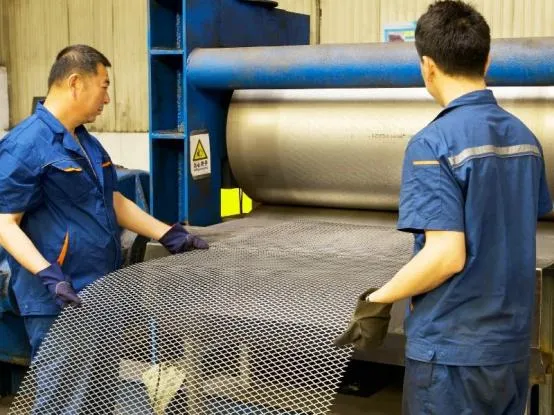
Flattening
We have cutting, flattening,bending, welding and other deep processing equipment. We have full capacity to provide specified deep processing and manufacturing services for your expanded metal products to meet your specific requirements.
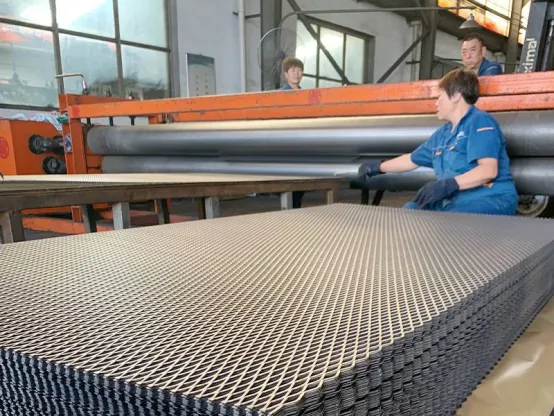
Leveling
We use high-precision leveling equipment to ensure a flat mesh surface, regular mesh openings, and industry-leading flatness tolerance.With years of experience, the company is equipped with multiple CNC leveling machines. Our professional team optimizes parameters, and strict quality control ensures high efficiency and zero rework, providing customers with reliable and high-quality products.
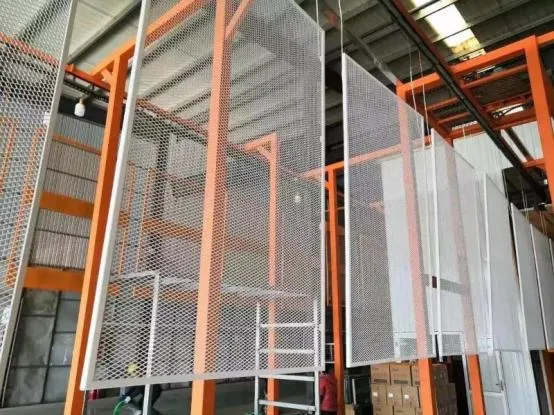
Surface treatment
We have galvanizing, powder coating, anodizing, PVDF coating and other surface treatment technologies. As a result, our expanded metal products not only enjoy an exceptional service life in terms of practical functions, but also deliver an amazing appearance in architectural decoration applications.
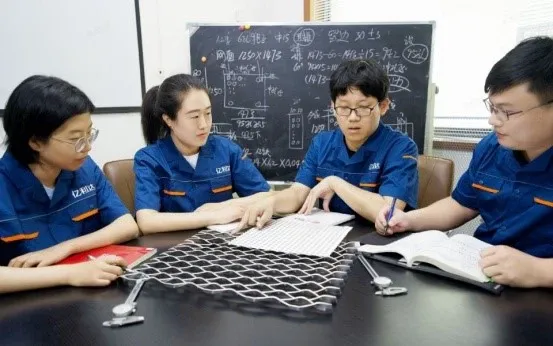
Quality inspection
During the production process, our technicians carry out real-time monitoring on punching, flattening, shearing and leveling links. On the one hand, we can test product quality at any time; on the other hand, we can find the the deficiencies in the production process and constantly improve our production line and product quality.
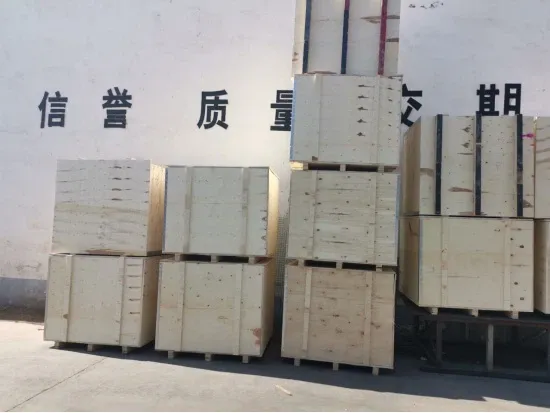
Packaging
According to the chemical and physical properties of the products, we use waterproof, moisture-proof and breakage-proof materials for packaging to avoid product damage during transportation. In addition, we can also provide customized packaging according to customer's specific requirements to meet the special needs of different customers.
Hot Tags: expanded metal,
Related Products
Send Inquiry
E-mail: sales@wiremesh-yld.cn
Tel.: +86 173 3387 1655
WhatsApp: +86 173 3387 1655
Add.: Wire Mesh Development Zone, Anping, Hebei Province, China